A few weeks ago I had the joy of leading a group of 7-10 year olds on a creek wander in Sugar Hollow. One girl was smaller than the rest of the group and needed to return to camp to swap for better shoes and use the bathroom soon after we descended the short trail down to the creek access under our rickety bridge. Because of this, we walked that short path three times, each time noticing a small grasshopper, motionless atop of a leaf. "Maybe it's dead," we wondered. "These things do happen." When we finally finished our wander, having veered west up a small, colder tributary- rich with worlds of exposed, gnarled sycamore root embedded with rocks and an uphill scramble emerging from the creek bed- we again walked down that short path to retrieve the cache of water bottles we'd stashed for hands-free ease of exploration. Still, the grasshopper was motionless. Now we knew it was dead, hours had passed. The smallest girl, who had been by my side often throughout the wander, requiring an extra hand of support where her small feet had less stability, was moved, wanted to honor the grasshopper's life and place in the world, and knew what to do. She plucked a sycamore leaf, soft and broad, and a yarrow flower, fragrant and delicate. Tenderly she laid the leaf back a few feet from the path, placed the flower atop it, and laid the grasshopper in the center, his resting place. She took my hand and we crossed the country road to head back to camp.
I was so taken with her simple wisdom. These two plants, and how well they were fitted to the task.
Sycamore, who likes to have wet feet, leading us to water to wash away our grief, usher souls from this world to the other invisible side. Sycamore whose bark, close to the earth, is brown, rooted, and barky, but as the eyes moves up the trunk it begins to flake away, peeling back in layers, before emerging, white and smooth, branched arms thrusting towards the sky like wings. An image of transcendance, transition, passing.
And yarrow, who treats deep cuts, lessening pain, stopping the bleeding, is a fitting medicine for grief. Yarrow's recorded history of human use is interlaced with the advancement of metalwork technology, especially in warfare. With new blades came deep-life threatening wounds, creating the urgent need for analgesic, antiseptic yarrow to stop the bleeding, reduce the pain, prevent infection. The trauma of grief cuts deeper than the blunt force wounds of the everyday, and calls for the medicine of yarrow. The oldest known use of yarrow was in a Neanderthal funeral setting, found laid beside a human skeleton dated to 100,000 BCE in a cave in Iraq. (for more info, and my source, check out Ryan Drum's amazing
page on yarrow) The leaves are dazzling complex, tiny and pointing in many directions, giving yarrow its specific name,
millefolium- a thousand leaves. This image, combined with the exploding umbel flower structure, give me a feeling of dispersal, that seems to frame a healthy view of passing.
The next day my partner arrived at camp with bad news: that a white man in Charleston had killed nine people in a black church. A Charleston native, my partner was angry and heartbroken. In country life, there's often not a way to join in on a group vigil or demonstration or action. We read the news but we live further from places where people gather and it feels hard for us to give support. There is this awful feeling of helplessness that comes with human atrocity, with injustice. We walk and work with grief and anger and it has no where to go. I took him to our swim hole to cool down, relief from the summer sun, and then upstream to the place near the bridge where I'd learned about grief from a seven-year-old. Together we set nine little yarrow leaves downstream on nine little sycamore-leaf boats, along with a wish to honor those souls robbed of their lives, and a wish for the watching world- for clear eyes, willingness to understand the still-relevant legacy of racism and white supremacy in our world, and for the inner fires leading the work towards a more-okay world. We hugged and walked back up that trail. We got what we needed then from that small act. Now, later on, the watching world is seeing the confederate flag come down from the State House in Columbia, SC. My hope is for the new children, southern babies, black and white babies, who are being born into a world where that flag isn't flown by the state, we welcome them into a world that is a step closer to the world they need, and deserve.

 irch, betula lenta, also commonly called black birch, cherry birch, and mahogany birch. There is one other birch in our area, bonus points if you can name it in the comments below (a hint: it’s more in the high mountains.) Birch is a profoundly useful tree: the bark was traditionally used in the making of canoes, baskets, and cups. The tar is called the first superglue as well as an early form of chewing gum. The Creek people used birch to treat tuberculosis; the Catawba boiled the buds with sulfur and made a salve to treat ringworm and sores. The Cherokee treated colds, dysentery, and urinary problems with birch tea and by chewing the young leaves. Today, folks laud the teas diuretic and sedative effects in addition to the soothing quality in topical uses—say, for example, that wily case of poison ivy that won’t respond to usual treatments like calamine, jewelweed, and even tannic acid made from boiling acorns (an anecdote from Tom Brown’s Guide to Wild Edible and Medicinal Plants).
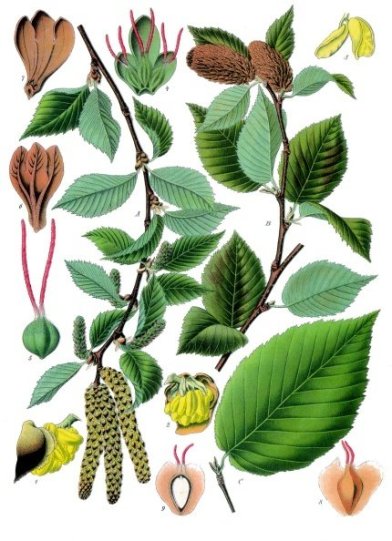 credibly enough, the inner bark can be boiled like noodles or dried and ground to make a flour. The wood burns reliably, even when wet, and can be used as dye for a fawnlike color. A birch feeds birds with a million seeds per year, and is the exclusive host to birch polypore mushroom, which I’ve read is used in finishing the finest edge in sharpening a knife.